Introduction
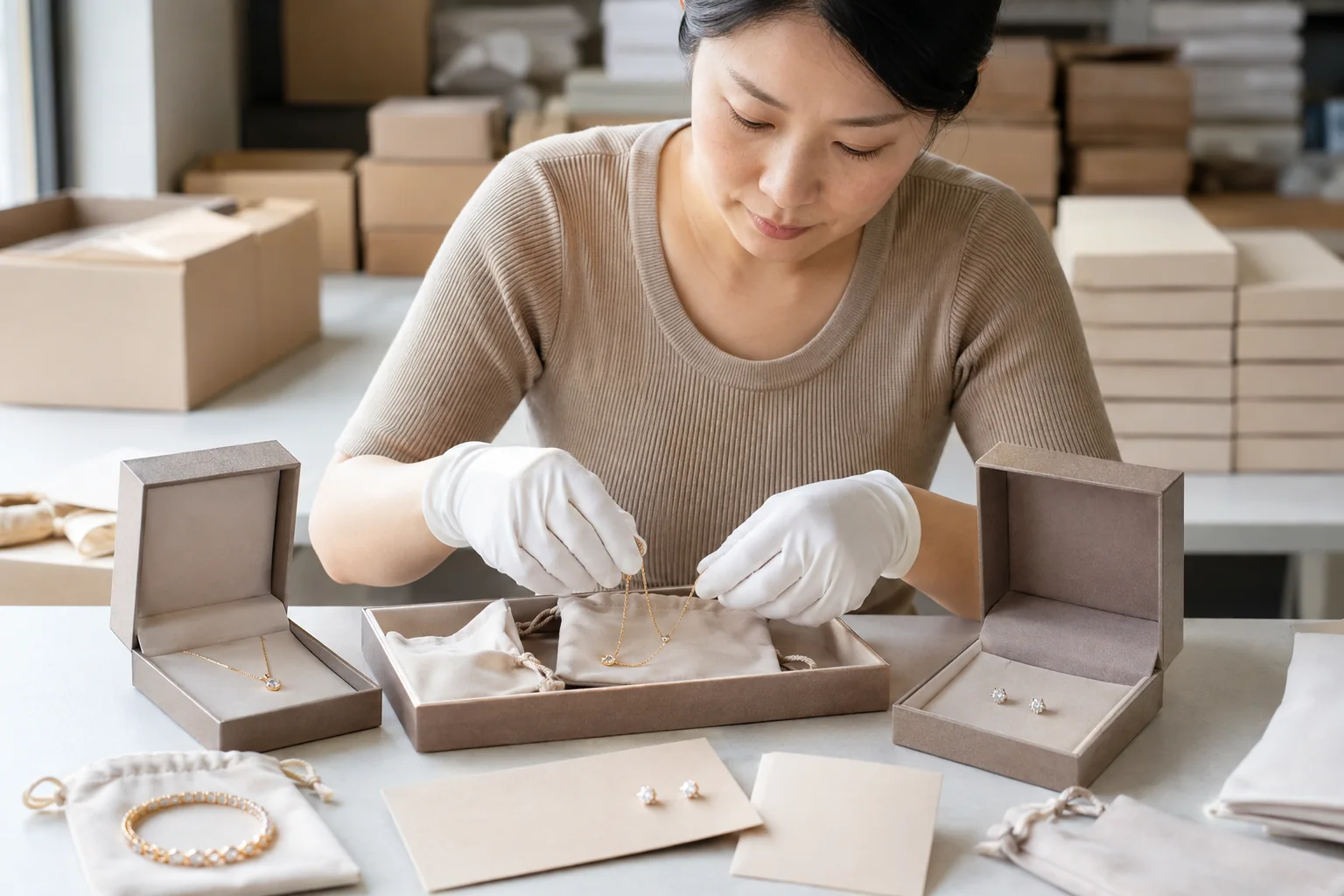
Necklaces are deceptively compact products: a small change to a link, clasp, extender, pendant connection, surface treatment, or presentation card can alter the product experience, cost, handling, and retail claim. This guide is for private-label brands, wholesalers, retailers, and importers. OWGOW plans from a 100-piece MOQ; sample planning is typically around three days after design direction and materials are confirmed, while typical bulk production is around 7–10 days after the scope is approved. Those are planning references, not universal promises: a bespoke pendant, new tooling, packaging change, material availability, approval cycle, or freight schedule can change the plan.
Begin with the product role, not a photo
The first purchasing decision is the necklace’s role in the assortment. Is it a lightweight everyday chain, a pendant-led gift, a layered fashion piece, a bridal accessory, a statement item, or a replenishable core SKU? That role determines the balance between material, finish, scale, product application, customer requirements, packaging, and price architecture. A reference photo can show direction, but it does not disclose the chain profile, link construction, clasp type, actual length, pendant weight, edge condition, base material, or pack arrangement.
Write one product record for each sellable configuration. Record the SKU, revision, reference image or drawing, intended sales market, finished length, extender range, pendant dimensions, target unit weight if relevant, base material and finish direction, components, logo or engraving, unit pack, quantity, and any non-negotiable appearance points. Label open decisions instead of leaving them implied.
| Review area | What the buyer should state | Why it matters |
|---|---|---|
| Product role | Everyday, gifting, event, core, or seasonal | Sets the appropriate construction and presentation |
| Finished build | collection story, core and seasonal roles, length and finish variants, price ladder, display capacity, and replenishment plan | Makes supplier quotations comparable |
| Approval reference | Dated sample, photos, and revision | Gives production and inspection one source of truth |
| Commercial scope | SKU quantity, packaging, market, and delivery window | Reveals cost and timing assumptions early |
Assess the finished construction in person
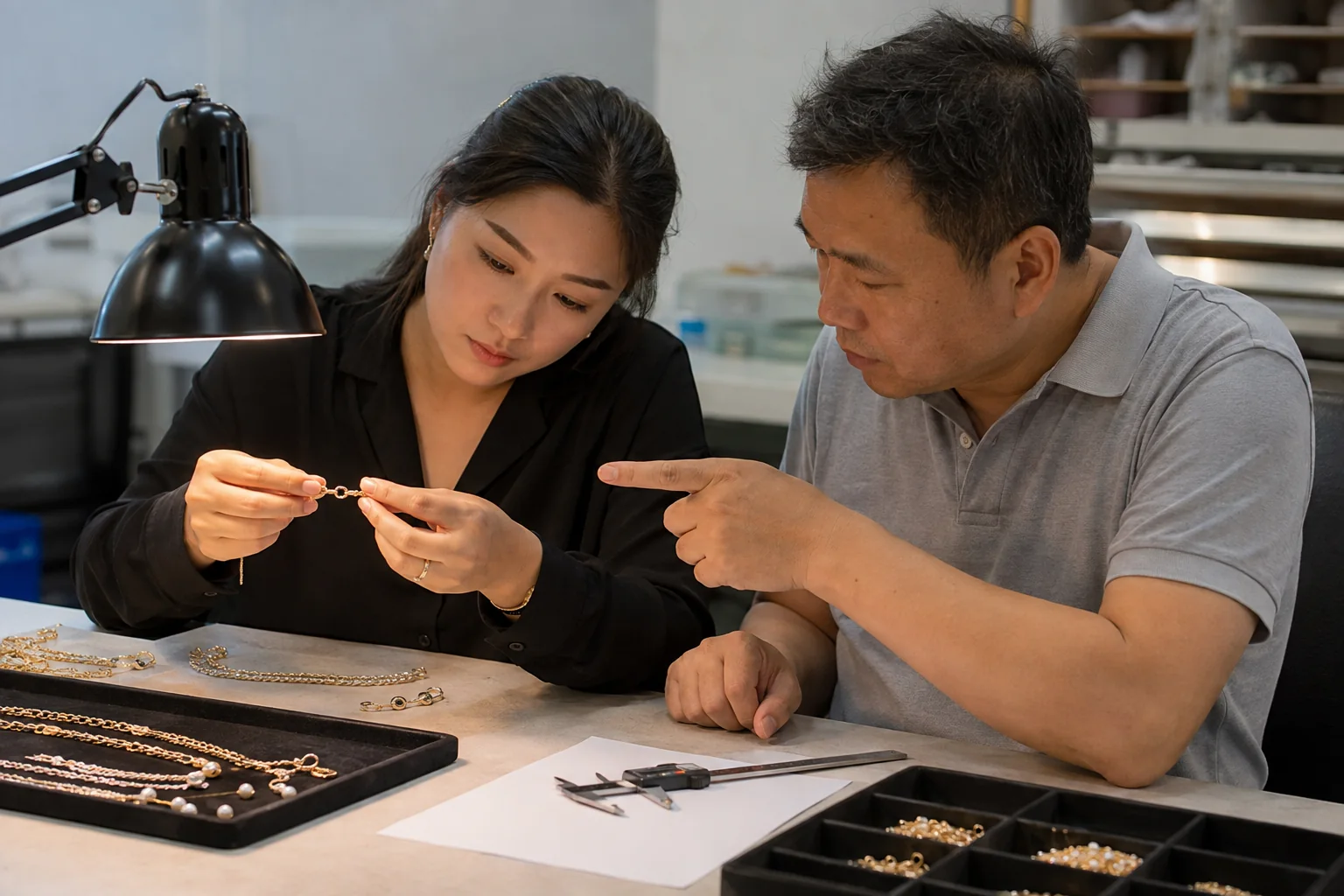
For a necklace, use a physical sample whenever the decision involves fit, balance, closure operation, comfort, visual scale, or packaging interaction. Measure the finished length in the agreed method and state whether the clasp is included. Check the extender range separately. If a pendant is used, inspect its orientation, bail, attachment point, movement, and how it sits on the chain. Review the back as carefully as the front: rough edges, uneven joins, protruding findings, or an awkward clasp can affect product quality even where the front image is appealing.
Translate customer requirements into observable checks
Customer requirements become actionable when the buyer can inspect them. “Premium finish” is too general; “gold-tone surface matched to the approved sample under normal indoor viewing, with no obvious bare spots or rough visible edges” is a reviewable instruction. “Gift-ready” is also incomplete until the chain restraint, pendant protection, card or insert, pouch or box, labels, and outer-carton handling are agreed. For everyday product application, test normal fastening, adjustment, presentation, and packing with the complete sample rather than detached components.
Treat a change as a new revision
A change in chain, finish, pendant, artwork, engraving, packaging, or quantity split can affect cost, feasibility, timing, and inspection. Record the change, identify the affected SKU, and decide whether a revised sample is needed. This is installation preparation for a retail program: the quote, approved sample, purchase order, product copy, packing file, and inspection sheet should all refer to the same version.
Compare quotations by scope
The lowest unit price does not necessarily describe the same necklace. Check what each supplier has included: base material, chain type, finish system, pendant or component count, clasp and extender, length, stones or decorative parts, logo or engraving, packaging, sample or tooling, factory testing where appropriate, shipment inspection support, and agreed handover term. Ask suppliers to state their assumptions in writing. A price comparison is meaningful only when these variables are aligned.
| Cost driver | Question for the RFQ | Buyer control |
|---|---|---|
| Construction | Which chain, clasp, extender, pendant, and connection are included? | Approve the build rather than a generic category name |
| Material and finish | What is the stated base and final surface direction? | Match the approved sample and consumer copy |
| Presentation | Which card, pouch, box, insert, and label are included? | Review the finished piece inside its actual pack |
| Quantity and timing | Does the quote cover every SKU and variation? | Confirm the 100-piece MOQ scope in writing |
Make this buying decision specific to the necklace
For this brief, do not let a broad phrase such as “standard necklace” replace a usable specification. The point the buyer needs to control is collection story, core and seasonal roles, length and finish variants, price ladder, display capacity, and replenishment plan. Put that point on the sample-review sheet and identify what an inspector, merchandiser, or customer can actually observe. If the necklace is intended for frequent wear, examine the working clasp, edges, balance, and adjustment path repeatedly on the complete sample. If it is intended as a gift, examine presentation, protection, and unboxing as part of the product—not as a separate afterthought. If it is intended for resale, decide which facts a retailer needs for a product page, display card, and replenishment order.
It is equally important to state the acceptable boundary. For example, a buyer may accept natural variation in a handmade texture but not a visible mismatch in a set; may accept a small tolerance in a flexible chain but not a change in the stated finished length; or may accept a packaging artwork revision only after a signed proof. These are commercial decisions, not assumptions a factory or inspection team should have to infer. A concise approval note with photos is often more valuable than an extensive but general email thread.
Set a sensible review sequence
Review the parts that are costly or difficult to correct earliest: product construction and length, material and finish direction, pendant and closure, artwork or personalization, and final packaging. Then confirm the quantity structure and delivery handover. This sequence gives the buyer a chance to resolve open issues before components are committed, while keeping the project understandable for a small or multi-SKU collection. It also helps prevent the common mismatch where the necklace sample is approved but the actual retail card, pouch, box, or carton has never been checked with it.
Build a clear handover record
The buyer should be able to hand one file set to a product manager, purchasing colleague, factory coordinator, inspection provider, and freight partner without changing the meaning. At minimum, keep the dated quote, approved product and packaging references, product description, artwork proof, inspection checklist, quantity list, carton information, and delivery term in one accessible place. Where product data will be used for ecommerce, include the approved length, material and finish wording, care information, and photography reference in the same trail.
This record supports trust without overstating certainty. It does not prove how every customer will wear a necklace or replace market-specific advice. It does show which item was approved, what was requested, how factory testing or shipment inspection was scoped, and what the buyer expects to receive. When a later reorder or retailer question arises, those details can be checked against the source rather than reconstructed from memory.
Mid-article CTA: prepare a quote-ready necklace brief
Planning a necklace collection? Send OWGOW the reference, target market, estimated quantity, finished length, material and finish direction, and packaging idea. We will identify the production details needed for a controlled quote and sample discussion. [Send your requirements](../../index.html#contact) or email [info@owgow.com](mailto:info@owgow.com).
Control production, inspection, and packing
Before bulk release, align the approved sample, product record, artwork or engraving proof, packaging artwork, purchase order, and inspection checklist. The checklist should use observable criteria: SKU identity, finished length, chain and clasp operation, pendant orientation, visible finish, component security, logo placement, engraving spelling, unit packaging, labels, and cartons. If a market or customer requires factory testing, define the actual finished configuration, scope, test method, responsible party, and timing; do not turn a general document into a universal performance claim.
During shipment inspection, compare selected finished pieces to the retained approved reference and written criteria. Check that chains are not tangled or caught in card slots, pendants are protected from rubbing, clasps are secure, packs are correctly assembled, and cartons can be handled without visibly affecting the unit pack. Photograph and document any exception accurately. Inspection is most useful when it confirms a controlled product reference, not when it attempts to interpret vague expectations at the end of production.
Plan claims and market evidence carefully
Product copy must match the finished SKU and evidence available for that configuration. The FTC Jewelry Guides are a useful primary reference for the principle that jewelry descriptions should not misrepresent material, quality, size, weight, treatment, origin, durability, or other product attributes. This guide is not legal, customs, tax, medical, or regulatory advice. For a particular sales market, obtain current qualified advice and review the relevant authority guidance.
Documentation should also be read by scope. A material statement, audit, or third-party report has a date, named subject, method, and conclusion. Confirm that it matches the actual necklace configuration and intended market before relying on it. OWGOW can discuss BSCI, ISO, SGS, REACH, and RoHS-related documentation for review where applicable; buyers should confirm the relevant product and market scope for their own requirements.
A practical five-step buyer workflow
- Brief the necklace. Document role, design reference, finished measurements, material and finish direction, components, product application, packaging, market, and quantity.
- Approve the complete sample. Inspect the necklace on the intended chain and in its intended pack; record the decision and revision.
- Release the same version. Align artwork, engraving, packaging, quote, and production instructions to the approved reference.
- Verify before dispatch. Use agreed factory testing where relevant, then carry out shipment inspection against identity, construction, finish, packaging, and carton criteria.
- Keep the reorder trail. Retain the product record, approved sample, inspection notes, packing data, and accepted variations for the next buying cycle.
FAQ
Can a buyer quote a necklace from one image?
An image can begin a discussion, but a practical quote requires more: chain type, finished length, clasp, extender, pendant or component detail, material and finish direction, estimated quantity, branding, packaging, and target market. Mark unknown items as open rather than assuming them.
Does the 100-piece MOQ apply to every finish and length?
OWGOW’s standard planning MOQ is 100 pieces, subject to confirmation for the actual SKU, finish, components, packaging, and quantity split. Ask for the MOQ scope by variation before committing a collection plan.
How should a buyer describe necklace length?
State the finished measurement method, whether the clasp is included, the extender range, and the intended fit. A physical sample is the best way to validate the measurement against the product application and target wearer.
What should happen if a component changes after approval?
Record the revised component and its impact on appearance, function, cost, packaging, and claims. When it affects the finished experience, approve a revised sample before bulk use.
Conclusion
An effective necklace sourcing decision combines an explicit product role, measured construction, complete-sample approval, observable quality criteria, protective packaging, and a documented shipment handover. This gives the buyer a clear basis for supplier comparison, merchandising, inspection, and reorders without making unsupported promises about the product.
CTA: start your necklace sourcing brief
Share your necklace reference, finished length, target quantity, material and finish direction, packaging concept, and intended sales market. [Get a quote](../../index.html#contact) or email [info@owgow.com](mailto:info@owgow.com).
ARTICLE TAGS
RELATED RESOURCES
Keep building the brief
Use these buyer resources to connect this decision with the next specification, approval, or sourcing step.
- Jewelry collections hub →
- How should buyers choose necklace for everyday wear, gifting, or resale? →
- Which materials and finishes should buyers compare when choosing necklace? →
External buyer reference: FTC Jewelry Guides