Introduction
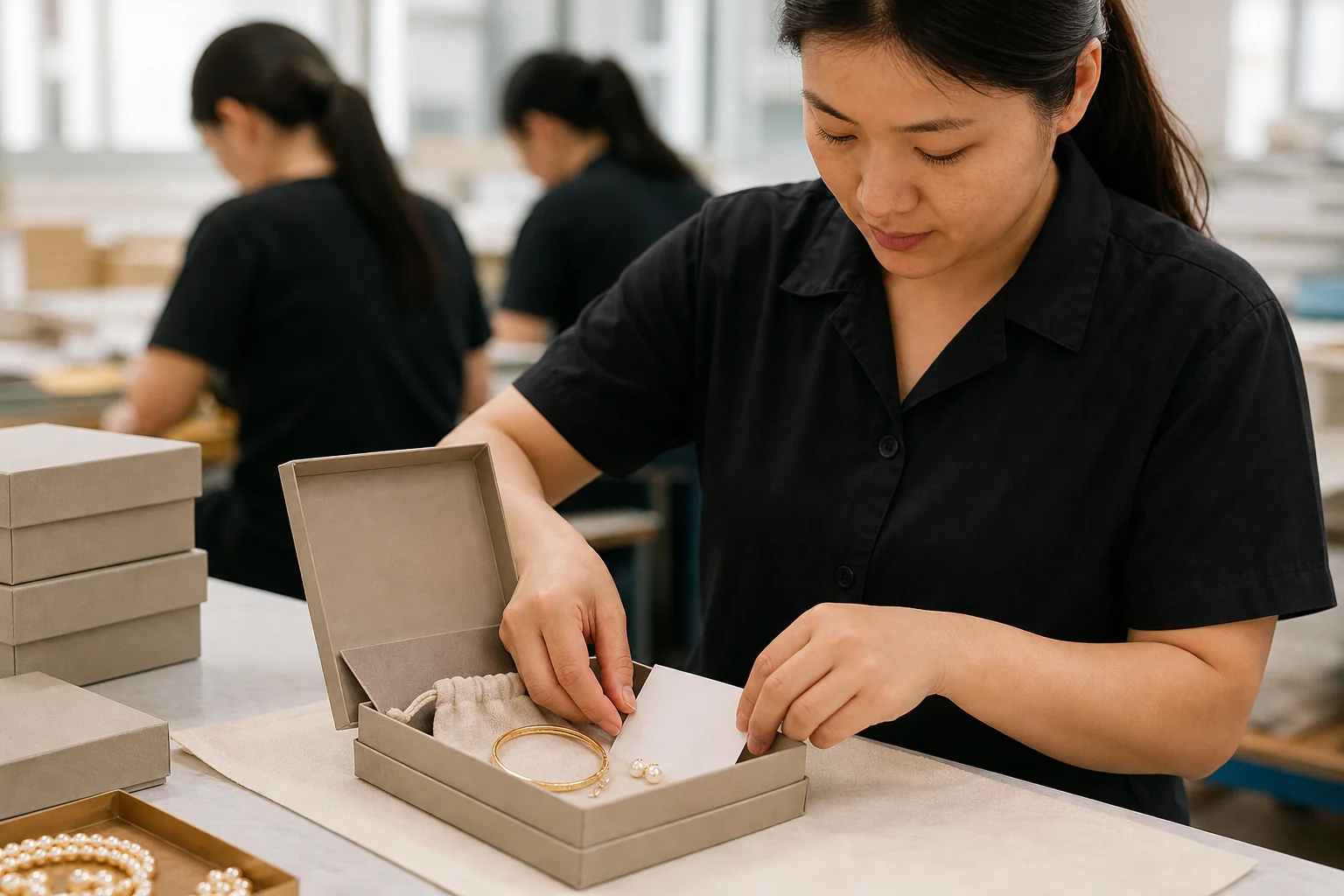
Brass jewelry uses a copper-zinc alloy base that can be formed into detailed shapes and finished in many visual directions. The word “brass” does not by itself describe the exact composition, coating, or finished-product claim. For a B2B buyer, the decision is not merely whether the sample looks right in a photograph. It is whether the finished SKU can be specified, approved, packed, inspected, described, and reordered without ambiguity. Before sourcing, review product identity, construction, market use, specification control, evidence needs, sample approval, packaging, quote scope, and shipment handover. OWGOW uses a planning MOQ from 100 pieces; sample planning is typically about three days after the design direction and materials are confirmed, and standard bulk production is typically about 7–10 days after scope approval. These are planning references, not promises for every configuration.
What buyers should evaluate first
A sourcing review should prove that the commercial brief and the factory reference describe the same product. A buyer should specify the base material description, casting or fabricated construction, plating or protective finish, dimensions, weight target, components, texture, stones, closure, brand marks, and packaging. Include who owns each decision, what revision is approved, which evidence will be reviewed, how a change is recorded, and what must be checked during shipment inspection.
Decision table for brass jewelry buyers
| Review area | Buyer decision | Supplier contribution |
|---|---|---|
| Product definition | Approve SKU, build, dimensions, visual standard, and pack. | Maintain revision control from quote to shipment. |
| Commercial fit | Confirm MOQ, pricing scope, sample plan, and lead-time assumptions. | Explain dependencies and open decisions. |
| Quality plan | Set inspection points and acceptance criteria. | Perform factory testing where relevant and shipment inspection against the brief. |
| Change control | Record any approved substitution or revised artwork. | Do not rely on informal verbal changes. |
Material-specific considerations
Brass jewelry uses a copper-zinc alloy base that can be formed into detailed shapes and finished in many visual directions. The word “brass” does not by itself describe the exact composition, coating, or finished-product claim. A buyer should specify the base material description, casting or fabricated construction, plating or protective finish, dimensions, weight target, components, texture, stones, closure, brand marks, and packaging. Brass can support detailed cast forms, warm-toned unplated or plated visual directions, and a premium-looking silhouette when the finish, edge quality, and weight are controlled. The surface can change in appearance if it is left uncoated or if a coating is affected by abrasion, moisture, or product use. Describe the actual finish and care expectations rather than making a generic durability promise.
Do not use a general category label as a substitute for product facts. The FTC Jewelry Guides explain that marketers should avoid deceptive descriptions and that material-related jewelry claims require care. For a buyer, the operational lesson is straightforward: use the wording that the approved item can support, retain the supporting product record, and update it when a component or surface changes. This article is a sourcing framework, not legal, tax, customs, medical, or regulatory advice.
Turn customer requirements into sample checks
Customer requirements become useful when they can be observed. If an item is intended for a high-rotation retail display, define how the unit will be packaged and handled. If it is a gifting item, check the finished piece inside its final card, pouch, or box. If it will be sold through a product page, decide which composition, finish, dimension, and care facts need to be disclosed before images and copy are released. Keep any market-specific question separate from a general sales claim.
Use evidence with the right scope
Supplier records, audit documents, material information, and third-party reports can each be useful, but none should be treated as a blanket approval. Check the item or material tested, version, date, method, destination relevance, and the exact conclusion. A change to the base material, coating, stone, finding, or product configuration may require the buyer to revisit the review. This is particularly important for claims that a customer may interpret as a promise about composition, skin contact, performance, or origin.
Mid-article CTA: send a quote-ready brief
Planning a brass jewelry program? Send OWGOW your reference images, product application, target market, estimated quantity, preferred material and finish, packaging direction, and customer requirements. We will identify the details needed for a controlled quote and sample discussion. [Send your requirements](../../index.html#contact) or email [info@owgow.com](mailto:info@owgow.com).
A practical buyer workflow
- Define the decision. Use a release checklist before sample approval and bulk production. Record the target market, sales channel, SKU, intended product application, estimated quantity, and customer requirements.
- Review a real sample. Check material, finish, dimensions, components, visual balance, comfort where relevant, and packaging interaction. Keep dated photos and a written approval status.
- Release production deliberately. Confirm artwork, pack configuration, component availability, inspection criteria, and any open points before materials are committed. This is installation preparation for a retail program: every handover should have an owner.
- Check the finished goods. During factory testing where appropriate and shipment inspection, compare the goods to the approved reference. Check SKU identity, count, visible finish, critical measurements, component security, unit pack, labels, and cartons.
- Keep the reorder record. Save the approved product reference, buyer decisions, quote scope, packaging file, inspection notes, and any accepted variations. A reorder is easier to control when the original decision trail is usable.
Questions to settle in the RFQ
A practical request for quotation should give the factory enough information to identify uncertainty early. For brass jewelry, ask the following questions before treating a price or timeline as final:
- Which product facts are approved, and which are still assumptions?
- Who approves the sample, artwork, packaging, quote, and shipment release?
- Which acceptance criteria can be checked objectively?
- Where will the approved reference and change log be stored for a repeat order?
The aim is not to make the first brief complicated. It is to separate confirmed choices from open decisions. That lets the supplier quote on a defined scope and lets the buyer see which decisions—such as a component change, revised finish, custom packaging, or split quantity—would affect feasibility, sample timing, unit price, or inspection work.
Convert review findings into acceptance criteria
The most useful acceptance criteria are observable and linked to the buyer’s approved requirements and the supplier’s release record. Instead of writing “good quality,” state what will be checked: correct SKU and quantity; agreed material and finish description; the approved color or texture reference; visible surface condition; critical dimensions; moving-part or closure operation; component and stone security; logo or mark placement; packaging fit; label and carton data. Where a requirement cannot be verified visually, identify the evidence, responsible party, and point in the process where it will be reviewed.
A simple severity approach can keep decisions proportionate. A critical issue is one that affects safety, legal requirements, product identity, or buyer acceptance. A major issue materially changes use, visible quality, assembly, or presentation. A minor issue is a limited cosmetic variation that is within an agreed standard. The buyer should define this framework with the supplier before bulk production, rather than deciding it after cartons are sealed.
This is also how factory testing and shipment inspection become useful rather than ceremonial. The factory team needs the approved sample and specification; the buyer needs a written acceptance record. If a change is approved, replace the old reference. If it is not approved, resolve it before the next production gate. That disciplined handover makes a later reorder more predictable.
From sample approval to first production
A sample is not merely a visual milestone. It is the point where the release checklist and buyer sign-off becomes a manufacturing reference. The buyer should retain the approved sample or a controlled photo set, note its date and revision, and ensure that the quote, purchase order, product copy, packaging artwork, and inspection sheet all point to the same configuration. If a component is substituted because of availability, the decision should be recorded before it reaches the production floor.
For a first order, plan a short release review with the factory. Confirm the purchase quantity by SKU and finish; the bill of materials or component list; the visual reference; required branding; unit pack; carton count; delivery term and collection instructions; and the inspection timing. This is especially important where a small change in a finding, chain, coating, or packaging insert would alter the finished customer experience. It also gives both parties a clear point to pause if customer requirements are incomplete.
The final review should connect three things: what the customer will see, what production will make, and what the shipment will contain. That connection is more valuable than a long list of vague promises. It makes product application clear to the retail team, gives the factory a usable control point, and gives the importer a better record if the product is reordered, repackaged, or adapted for another market.
Packaging, product copy, and handover controls
The finished product needs one consistent identity across its physical item, website description, packaging, purchase order, and shipment documents. At minimum, maintain the SKU, title, material description, finish, dimensions, component notes, quantity, pack method, country-of-sale plan, care wording, and current artwork revision. This prevents a common failure: a product page, sample, and carton label referring to slightly different versions of the same item.
Before dispatch, use a practical shipment inspection record. It should confirm the SKU and count, visible finish, assembly, critical dimensions, closures or moving parts, decorative component security, logo or mark placement, unit packaging, labels, carton quantities, and external carton condition. If a discrepancy is accepted, log it against the approved revision. A buyer should never rely on a verbal exception after a shipment has been released.
How OWGOW supports a controlled sourcing discussion
OWGOW can work from a product brief, reference image, tech pack, or existing sample. The first discussion should settle what is known and what still needs confirmation: material description, finish, construction, expected retail role, quantity, packaging, target market, and delivery handover. Our standard planning MOQ is 100 pieces. Sample planning is typically around three days after the design and materials are confirmed, and typical bulk production is 7–10 days after scope approval. Timing varies with design complexity, materials, artwork, packaging, revision cycles, customer requirements, and freight arrangements.
For a related guide, see [Brass Jewelry sourcing context](../jewelry-findings-and-clasps-specification-guide/). You can also review our [sample approval and pre-shipment inspection checklist](../jewelry-sample-approval-pre-shipment-inspection-checklist/) and [jewelry compliance document request list](../jewelry-compliance-documents-for-eu-and-us-buyers/).

FAQ
When should shipment inspection be planned?
Set the inspection criteria during product planning and apply them before dispatch. The inspection should compare finished goods, packaging, and carton details with the approved reference and written acceptance criteria.
Can a catalog photograph be used as a complete brass jewelry specification?
No. A photograph is a useful visual direction, but it rarely defines the exact construction, finish, dimensions, weight, components, closure, packaging, or acceptable variation. Use it with a written brief and an approved physical sample.
What should change after a sample revision?
Update the product revision, images, material or component notes, finish reference, measurements, packaging files, price assumptions, and any retail copy that describes the changed feature.
Can OWGOW provide legal or medical advice?
No. OWGOW can explain product configuration, available documentation, sample planning, factory testing where relevant, and shipment preparation. Buyers should use qualified advisers for legal, tax, customs, regulatory, or medical conclusions.
Conclusion
Before sourcing, review product identity, construction, market use, specification control, evidence needs, sample approval, packaging, quote scope, and shipment handover. The most reliable route is to make the commercial purpose and physical product agree: document the configuration, approve a real sample, review its market-facing description and packaging, control changes, and use the same reference during factory testing where relevant and shipment inspection.
CTA: start your brass jewelry enquiry
Share your target product, reference image or SKU, estimated quantity, material and finish preference, packaging plan, and selling market. OWGOW will help you turn the brief into a practical production conversation. [Get a quote](../../index.html#contact) or email [info@owgow.com](mailto:info@owgow.com).
ARTICLE TAGS
RELATED RESOURCES
Keep building the brief
Use these buyer resources to connect this decision with the next specification, approval, or sourcing step.
- Jewelry collections hub →
- How should buyers choose Brass Jewelry? →
- Which specifications matter most when choosing Brass Jewelry? →
External buyer reference: FTC Jewelry Guides