Introduction
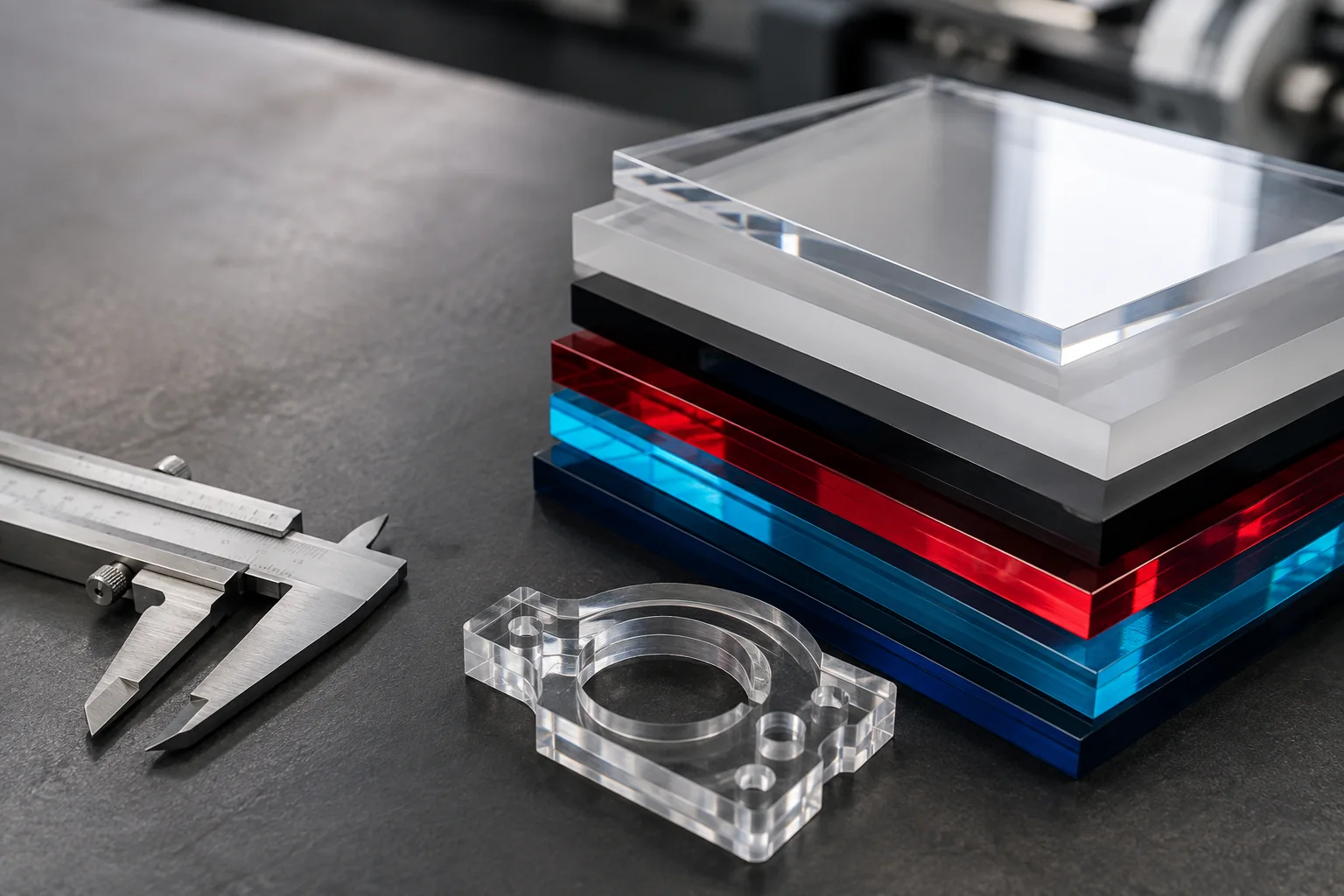
Custom jewelry packaging has two jobs: present the brand clearly and protect the exact product through handling, storage, and delivery. A beautiful box that allows a necklace to tangle, presses on an earring post, scratches a finish, or lacks the required label is not a finished packaging solution.
For private-label buyers, packaging should be specified alongside the jewelry sample, not after bulk production begins. This guide covers the questions that make boxes, pouches, cards, inserts, and cartons quote-ready.
The short answer: what must packaging solve?
Packaging must fit the actual SKU, prevent avoidable movement or abrasion, carry approved branding and labels, and work within the chosen shipping and retail process. Confirm these points with the product physically installed in the final packaging.
Start with the product, not the box style
List the product’s shape, dimensions, weight, chain length, delicate points, and intended customer experience. A ring, hoop earring, pearl strand, pendant, and multi-piece set do not need the same retention method. For necklaces, installation preparation should show how the chain is secured and how the pendant is protected. For earrings, check post, backing, and pair orientation. For stones, avoid pressure on raised settings.
Then add your brand requirements: logo artwork, color, finish, printed information, barcode or label format, insert card, pouch, care card, and sustainability claim. No claim should be placed on packaging unless it can be supported and used accurately for the market.
A packaging specification checklist
| Area | Questions to answer |
|---|---|
| Product fit | Does the exact SKU sit securely without pressure or movement? |
| Protection | What prevents abrasion, tangling, bending, or stone impact? |
| Brand | Which logo version, placement, print color, and artwork revision apply? |
| Information | What labels, SKU marks, origin or care text are required? |
| Outer pack | How are units bagged, counted, divided, and marked for shipment? |
| Approval | Which physical sample and artwork proof are the references? |
Treat printed components as their own production stream
Cards, boxes, pouches, stickers, and inserts may have separate artwork cycles and MOQs. Include their quantity, dimensions, material, print method, color reference, and packing method in the quotation. A 100-piece jewelry order does not automatically mean a printed box can be ordered at the same quantity.
Ask for a complete mock-up before bulk work: the real jewelry in the actual card, pouch, or box. This is where product application and display presentation meet. A product can fit a packaging prototype but fail once a tag, protective sleeve, or secondary insert is added.
Quality controls before shipment
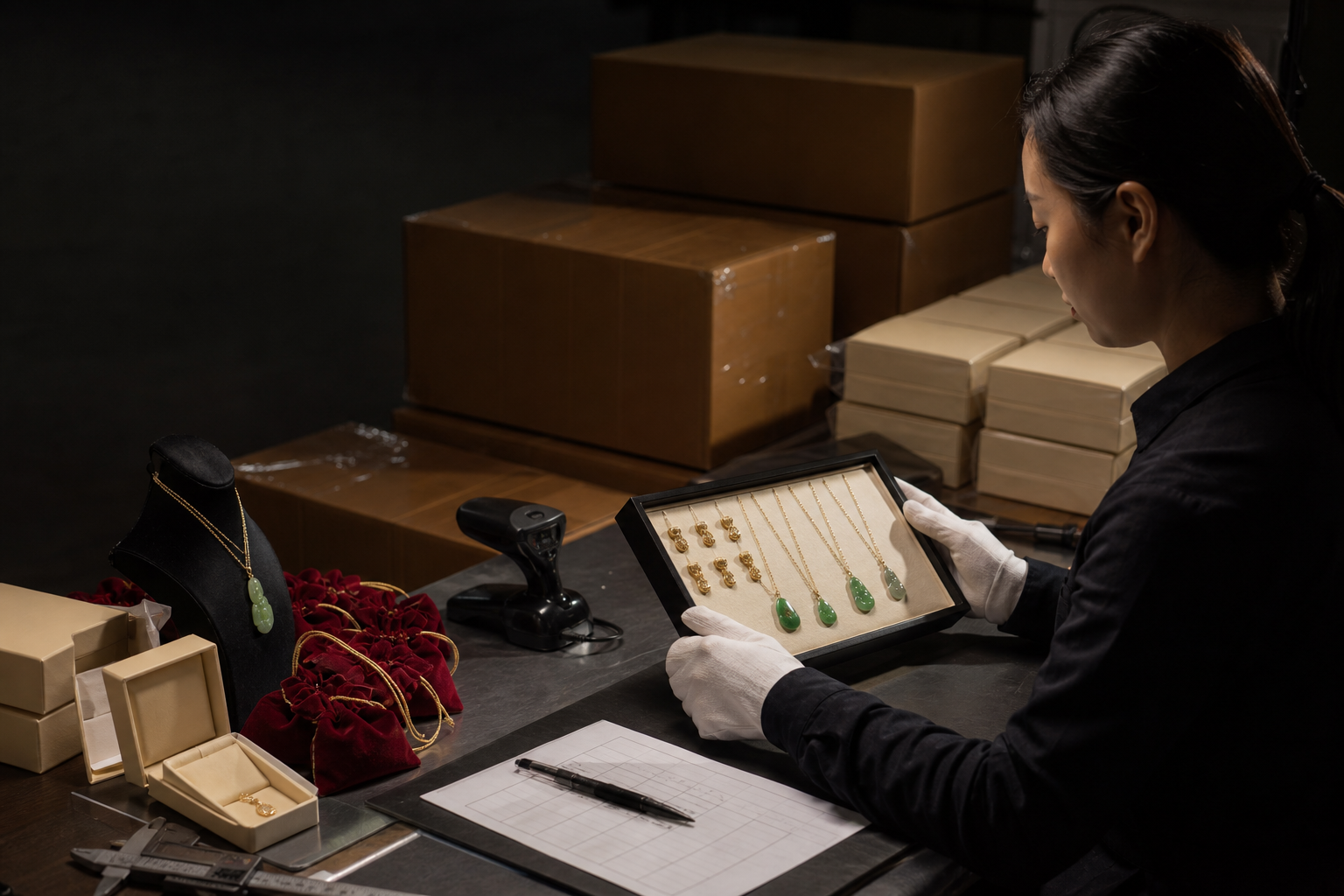
During factory testing and shipment inspection, check not only the jewelry but the final pack. Review logo accuracy, print alignment, box closure, pouch quality, unit count, label-to-SKU match, protective materials, and outer-carton marks. Open selected finished packs to confirm that a necklace is not tangled and a set is complete.
Common failure points include wrong card artwork, missing protective film, mixed sizes, abrasive inserts, weak adhesive, unprotected stone settings, and cartons that do not match packing-list quantities. Photograph the approved packaging configuration and retain it with the product specification.
FAQ
Should the packaging sample be approved at the same time as the jewelry sample?
Yes. Product and packaging should be reviewed together because fit and protection depend on the exact item.
Can a pouch replace a box?
Possibly. The choice depends on brand position, product fragility, display needs, shipping route, and protection. Test the product in its final pack before deciding.
What should be inspected in outer cartons?
Check carton count, item count, labels, SKU mix, sealing, exterior condition, internal protection, and alignment with the packing list and agreed handover instructions.
Conclusion
Packaging is part of the product specification. Define fit, protection, artwork, information, and shipping preparation early; approve a real assembled sample; and inspect the final packed unit before shipment. That approach protects the product, brand experience, and reorder consistency.
CTA
[Ask for a Product Catalog](mailto:info@owgow.com) or send your current packaging concept for a quote-ready review. See also our MOQ planning guide.
ARTICLE TAGS
RELATED RESOURCES
Keep building the brief
Use these buyer resources to connect this decision with the next specification, approval, or sourcing step.
- Jewelry collections hub →
- How to Choose a Private Label Jewelry Manufacturer →
- Gold Vermeil vs. Gold-Plated vs. PVD Stainless Steel →
External buyer reference: European Chemicals Agency: REACH