Introduction
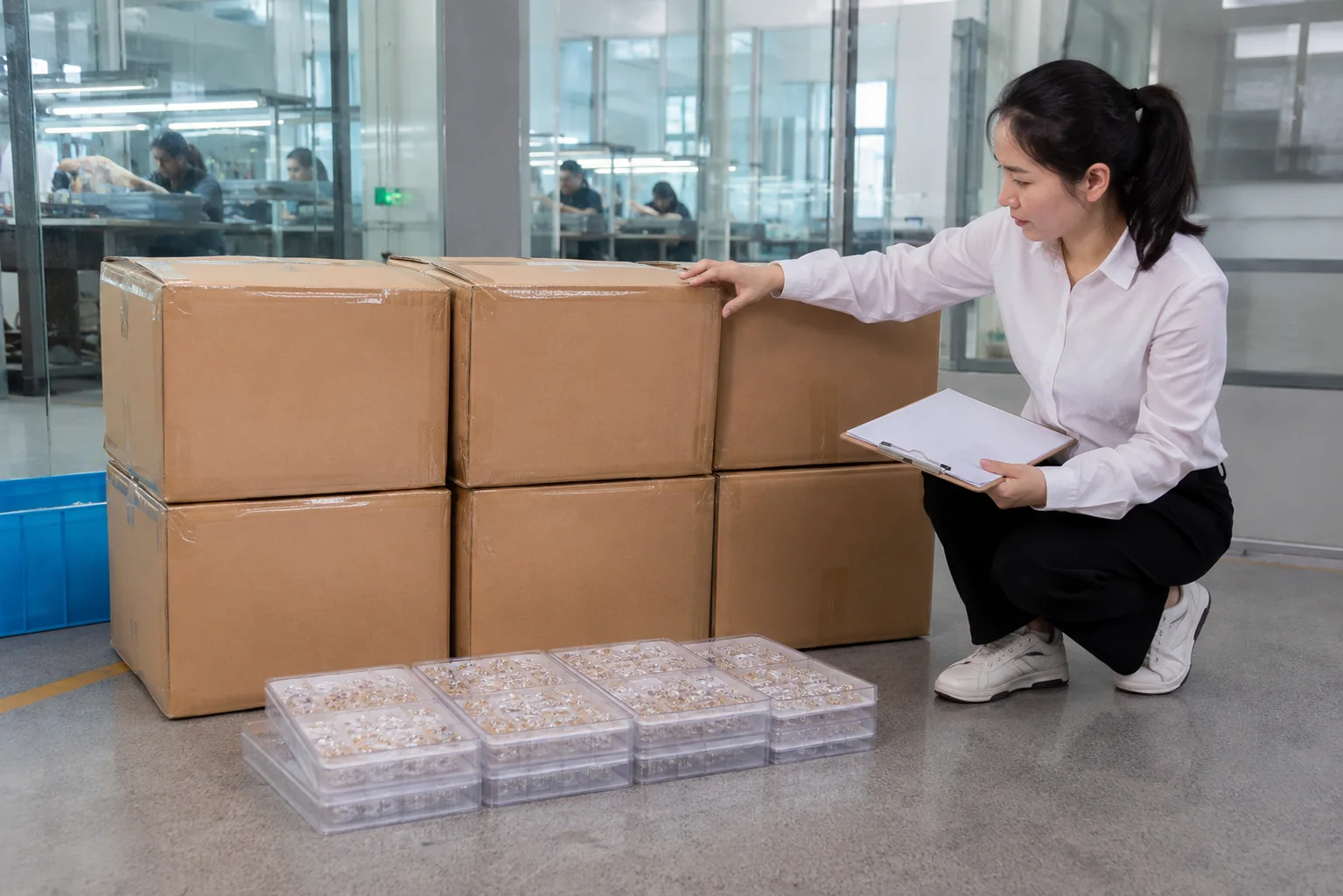
For a jewelry buyer, an origin label can look like a small operational detail. In practice, it reaches product engineering, packaging, merchandising, customs documentation, e-commerce photography, retail presentation, and consumer-facing claims. A necklace can be made from components with different origins; a private-label box can include a city address; a retailer can use marketing language that unintentionally creates an origin implication; and a change to final assembly can alter the information that needs review.
This is a planning guide, not legal advice. Country-of-origin rules, exceptions, product marking methods, and claim rules vary by market and factual manufacturing route. For U.S. imports, U.S. Customs and Border Protection (CBP) explains that imported articles generally require country-of-origin marking unless an exception applies, and its rulings show why the complete facts matter. Buyers should confirm the rule, classification, marking method, and importer responsibilities with qualified customs, legal, and destination-market advisers before release.
OWGOW supports B2B jewelry projects from a 100-piece MOQ. Samples are typically planned in about three days once the agreed design and materials are ready; standard bulk production is typically about 7–10 days after scope approval. Those timings do not replace a buyer’s compliance review. They make it useful to settle the origin-label brief early, while the product and pack are still controllable.
The six keyword themes this guide serves
This guide addresses six closely connected purchase-intent queries:
- jewelry country of origin label
- made in China jewelry label
- imported jewelry labeling requirements
- jewelry country of origin marking
- jewelry import labeling checklist
- private label jewelry country of origin
Start with the commercial question, then verify the legal one
The first internal question is not “where can a label fit?” It is “what is the finished article, where is it manufactured, who will receive it, and what will the customer see?” The answer should be based on documented production facts rather than a sales description. Map the metal base, components, plating or finishing, assembly, final inspection, packaging, and final destination. Keep the answer factual even if a label is not yet selected.
For U.S.-bound product, CBP describes country of origin for marking purposes as the country of manufacture, production, or growth; when further work or material is added elsewhere, the origin analysis can depend on whether there has been a substantial transformation. That is one reason not to copy a phrase from a previous SKU or another market. The current CBP import guidance on marking and its published jewelry origin-marking rulings are useful starting points, but a buyer should not treat them as a determination for a different product or transaction.
| Planning question | Evidence to retain | Why it matters |
|---|---|---|
| What is the finished SKU? | Dated specification, BOM, photographs | Prevents a label being approved for an obsolete configuration |
| Where does each meaningful operation occur? | Process map and supplier confirmation | Gives advisers the facts required for origin review |
| Which market receives the goods? | Destination and importer information | Rules and presentation expectations are market-specific |
| What will be marked? | Product, attached tag, packaging, or combination | Turns the legal conclusion into a practical production instruction |
| What other place names appear? | Artwork proof, card, box, website copy | Helps reviewers identify potentially confusing context |
Do not reduce origin to a supplier address
A factory or company address is useful commercial information, but it is not automatically an origin conclusion. Likewise, a brand’s registered address, a fulfillment location, a designer’s city, or a trade-show location can appear on packaging for valid reasons without answering the product-origin question. Treat all of those words as artwork elements for review. If a non-origin place name is prominent, ask the destination-market adviser to assess the complete label and package instead of trying to solve the issue with typography alone.
Build a traceable origin-label brief
A usable brief helps the supplier, packaging team, inspector, importer, and buyer work from the same version. It should identify the SKU and variation, destination market, requested origin expression only after review, proposed mark location, method of attachment or printing, artwork revision, package configuration, relevant place names, language requirements where applicable, sample approval owner, and release date. Avoid vague instructions such as “add country label.”
For a made in China jewelry label, document whether the buyer has asked for product marking, an attached tag, packaging marking, or another approved route. Do not assume that a carton mark will satisfy retail-level requirements, or that a product label is appropriate for a particular material and design. The right solution can depend on the product, the market rule, and the way it reaches the ultimate purchaser.
| Brief item | Example of a controlled instruction | Avoid |
|---|---|---|
| SKU scope | “Applies to NK-214, gold-tone, 45 cm, revision C” | “Use on necklace collection” |
| Mark location | “Approved location shown on sample photo and pack drawing” | “Put it somewhere discreet” |
| Artwork | “Packaging file PK-214-R3, approved date and owner” | “Use latest logo” |
| Product route | “Finished assembly and pack-out described in process map” | “Same as last order” |
| Verification | “Inspect against approved physical reference and specification” | “Check labels before shipping” |
The brief should travel with the purchase order and packaging files. This allows customer requirements to be compared with the actual finished SKU before bulk packing. It also prevents a common handoff problem: the product team approves a label concept, while the packaging supplier works from an earlier artboard without the relevant instruction.
Separate origin marking from brand and sustainability claims
Origin, brand provenance, material disclosure, recycled-content language, and environmental claims are different claims. They should not be merged into one unreviewed sentence. A brand may want a Shenzhen address on a card, for example, while the destination market needs a separately reviewed country-of-origin statement. A buyer may also wish to state a material or responsible-sourcing attribute; that requires its own supporting evidence and scope check.
The U.S. Federal Trade Commission’s Green Guides are a helpful reminder that broad environmental marketing claims need appropriate substantiation. The same discipline is useful here: do not let a factory audit, a document related to BSCI, ISO, SGS, REACH, or RoHS, or a supplier statement become a blanket consumer claim about every jewelry SKU. OWGOW can make related documentation available for review where applicable, while the buyer remains responsible for confirming the scope against the exact product and market.
A practical artwork review sequence
- Freeze the product facts: SKU, material configuration, components, assembly route, and destination.
- Ask qualified advisers for the required origin treatment and any connected label or claim review.
- Update the artwork, tag, and packaging drawing from one controlled text source.
- Approve a physical sample, not only a PDF proof; check readability, attachment, product interaction, and presentation.
- Issue the approved reference and inspection points before bulk packing.
This is installation preparation for a cross-functional launch. It gives procurement, quality, sales, warehouse, and merchandising teams a single operational reference rather than separate messages that can drift.
Mid-article CTA: turn your label brief into a sourcing checklist
Planning a private-label jewelry order? Send OWGOW your SKU list, target markets, packaging concept, and any reviewed label language. We can identify the product and pack details needed for a controlled quotation and sample plan. [Send your requirements](../../index.html#contact) or email [info@owgow.com](mailto:info@owgow.com).
Test labels on the finished product and final pack
An origin expression may be correct in a document and still fail operationally on the finished unit. A small tag can catch on a chain; a label can obscure a care card; a printed box can change when the insert is revised; or a pouch can separate from the item during fulfillment. The physical sample review should consider the product application: retail display, gift presentation, e-commerce shipment, wholesale handover, or a mix of these.
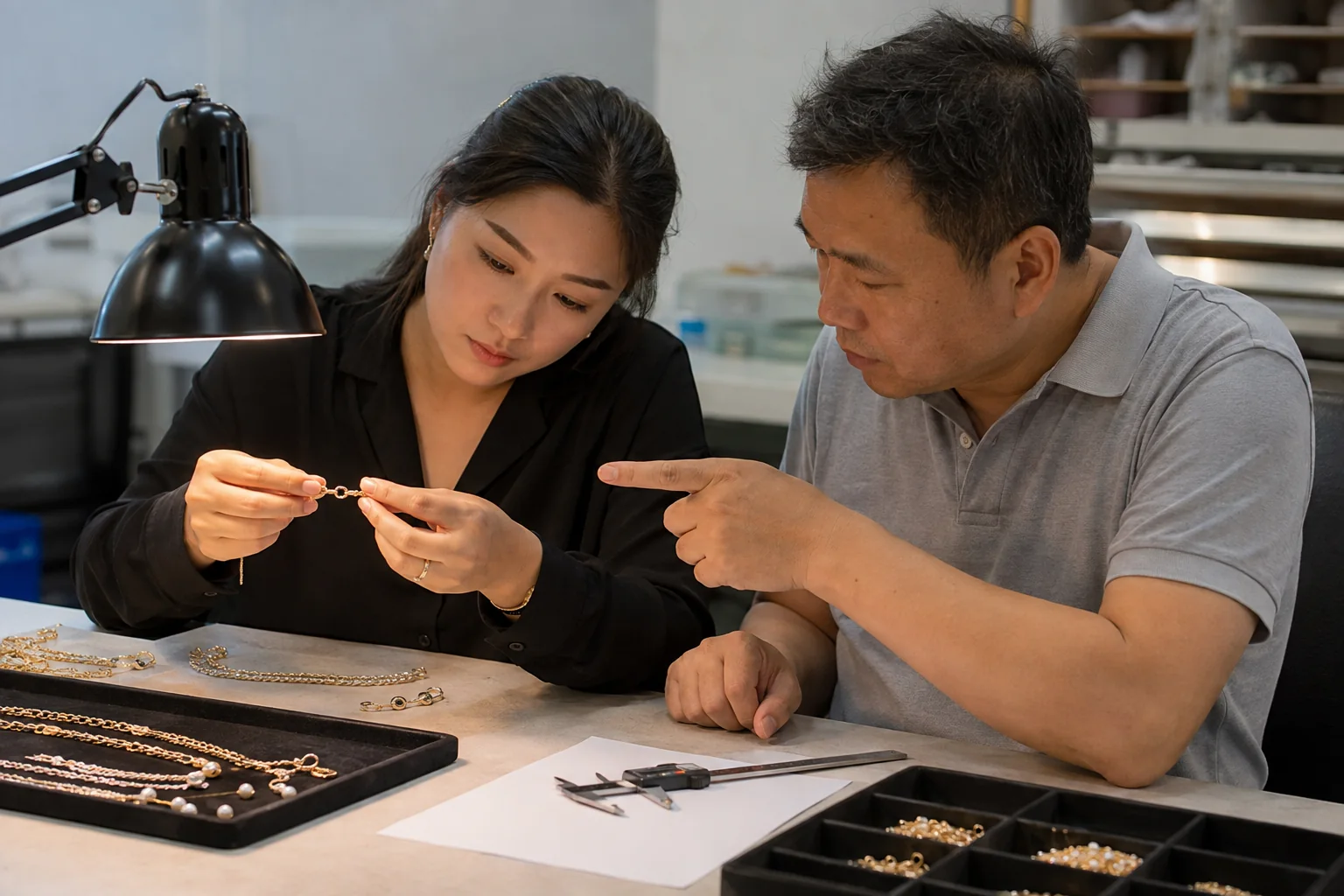
At the sample stage, examine the mark in normal handling and display conditions. Check whether it is legible at the approved scale, remains attached or readable as intended, matches the approved text, and works with the finished jewelry. Record what was actually reviewed with photographs and a dated sample reference. This creates evidence for a later product change rather than relying on memory.
| Physical check | What to observe | Record |
|---|---|---|
| Product interaction | Does a tag scratch, snag, or unbalance the item? | SKU, sample revision, issue and disposition |
| Visual reading | Is the approved text readable in normal handling? | Close photo and artwork revision |
| Package interaction | Does the origin information remain visible as planned? | Pack-out photo and packaging version |
| Artwork consistency | Do product, card, box, and care insert use approved copy? | File names and approval date |
| Assortment control | Are different SKUs or markets separated correctly? | Carton/SKU mapping and count |
Factory testing in this context means checking defined, observable product-and-package conditions; it is not a substitute for a legal determination. The factory team can check the approved reference, application method, legibility, placement, and pack-out consistency. If the buyer needs a technical test or a formal regulatory assessment, define its method, acceptance criteria, and responsible party before claiming it has occurred.
Put origin controls into shipment inspection
Origin labeling is most controllable when it is part of the normal release checklist—not an emergency request after goods have been sealed. The inspection plan should identify the exact samples to examine, the approved reference, SKU-to-market mapping, the product and packaging elements to compare, photo requirements, and escalation route for discrepancies.
During shipment inspection, selected units should be opened from representative packs and compared with the approved product, tag, card, pouch, box, and artwork. Inspectors should record facts: “text differs from approved file,” “tag missing on two selected units,” or “carton contains mixed market packaging.” Avoid a subjective instruction such as “origin labeling looks good.” A factual record makes it possible to decide whether an issue is isolated, systemic, or requires rework.
For a bulk jewelry program, add these release points:
- Confirm the final SKU/market allocation before packing starts.
- Confirm that the physical reference matches the approved artwork revision.
- Verify product, unit pack, and inner-pack interactions—not only master cartons.
- Photograph both compliant examples and any variation for the buyer’s decision.
- Reconcile any rework with a revised inspection record before dispatch.
This approach connects shipment inspection with the other controls a buyer already needs: quantity, visible finish, closure or component checks, packaging, carton count, and document handover. It also protects the customer from receiving a mixed presentation that warehouse teams may be unable to correct efficiently.
Coordinate private-label origin work with the importer
Private-label jewelry country of origin planning works best when the brand, importer, factory, packaging partner, and adviser agree on responsibilities early. The brand owns commercial presentation and launch decisions. The importer needs to manage import and destination obligations. The supplier needs a clear, reviewable production and packaging instruction. An adviser can assess market-specific legal and customs questions. No one role should assume that another has made the origin decision.
Ask the importer which documents, descriptions, and product photographs are needed before shipment. Keep the commercial invoice, packing list, purchase order, product specification, approved label artwork, and inspection records internally consistent. If a buyer changes the packaging, destination, product configuration, or brand wording, revisit the label brief rather than carrying a previous approval forward automatically.
For broader customs coordination, OWGOW’s [Incoterms guide for jewelry importers](../incoterms-for-jewelry-importers-exw-fca-fob-guide/) and [landed-cost planning guide](../jewelry-landed-cost-import-planning-guide/) explain why responsibility and assumptions should be stated clearly. For origin-style brand claims, the [Made in USA jewelry claim sourcing guide](../made-in-usa-jewelry-claim-sourcing-guide/) is a useful related reading—not a substitute for advice on imported product marking.
FAQ
Is a jewelry country of origin label always required on the jewelry itself?
Do not assume a single answer applies across markets or products. The required treatment can depend on destination, product facts, exceptions, packaging route, and how the ultimate purchaser receives the goods. Confirm the applicable requirement with qualified advisers before release.
Can I place a made in China jewelry label only on the box?
That is a market- and product-specific question. The buyer should obtain advice for the actual item, packaging route, and import transaction, then approve the complete physical sample and production instruction. A convenient location is not evidence that the route is acceptable.
What should a jewelry import labeling checklist include?
At minimum: finished SKU facts, manufacturing route, destination, reviewed origin language, mark location/method, artwork revision, sample approval, SKU-to-market allocation, inspection points, shipment record, and a change-control owner.
Does private-label packaging change country of origin?
Private-label packaging can change the presentation and the practical marking plan, but it does not by itself answer the origin analysis. Record what operation occurs where, then obtain advice on the finished article and destination-market requirement.
Conclusion
Country-of-origin labels for imported jewelry become manageable when they are treated as a documented product-and-packaging workstream. Start with the facts, seek market-specific advice, control the wording and artwork, approve a physical reference, and inspect the finished unit before shipment. That is more reliable than copying a phrase from an older order or leaving the decision until goods are packed.
CTA: prepare your import-ready jewelry brief
Share your product reference, quantity, destination markets, packaging concept, and reviewed label requirements. OWGOW can help organize the product and pack details for sampling and production. [Get a quote](../../index.html#contact) or email [info@owgow.com](mailto:info@owgow.com).
ARTICLE TAGS
RELATED RESOURCES
Keep building the brief
Use these buyer resources to connect this decision with the next specification, approval, or sourcing step.
- Jewelry collections hub →
- How to Choose a Private Label Jewelry Manufacturer →
- Gold Vermeil vs. Gold-Plated vs. PVD Stainless Steel →
External buyer reference: ICC Incoterms® 2020