Introduction
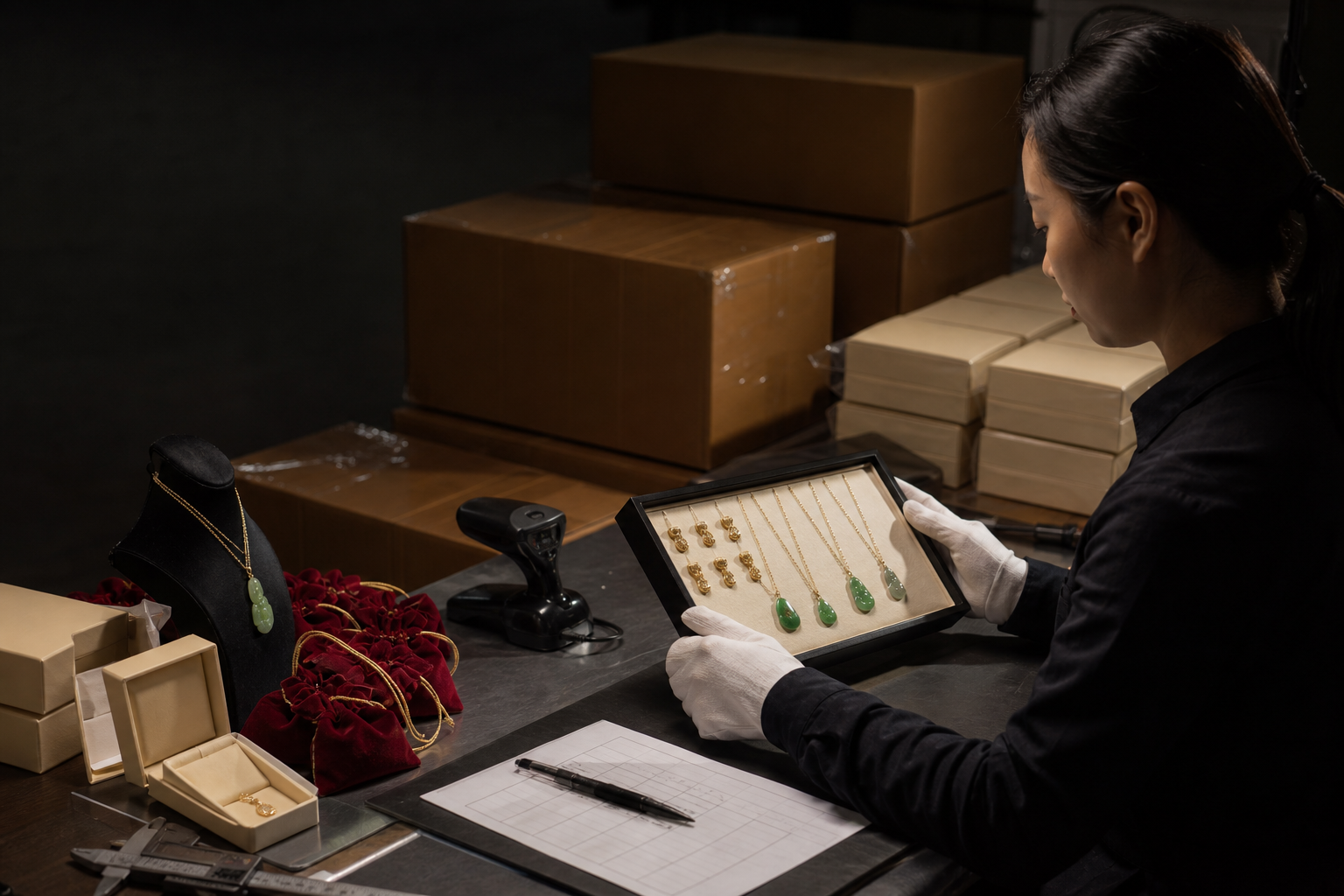
Sample development often involves small but meaningful adjustments: a chain length, earring back, stone color, finish tone, logo position, card cut-out, or carton count. Version control prevents a buyer from approving one version while production uses another. Every change to a jewelry sample should receive a revision number, a clear description, an approval decision, an effect on price and timeline, and a list of downstream files that must be updated before bulk production. At OWGOW, a project can begin from an enquiry, reference image, tech pack, or existing sample. Our planning MOQ is 100 pieces; sample planning is typically around three days after the design direction and materials are confirmed, while standard bulk production is typically around 7–10 days after scope approval. Actual timing depends on design complexity, customer requirements, materials, artwork, packaging, revisions, and freight arrangements.
Why this control matters for jewelry buyers
Sample development often involves small but meaningful adjustments: a chain length, earring back, stone color, finish tone, logo position, card cut-out, or carton count. Version control prevents a buyer from approving one version while production uses another. Jewelry has many small, visible parts: a finding, chain, clasp, earring post, stone setting, plating direction, logo card, insert, or carton count can change the customer-facing result. A clear operating record makes product application, customer requirements, and commercial responsibility visible to the people who need to make a decision. It is not bureaucracy for its own sake; it is a way to prevent the order from becoming a collection of disconnected messages.
The relevant record fields are: SKU; old and new revision; change description; reason; request date; requested by; sample evidence; effect on cost; effect on lead time; packaging or artwork effect; approval decision; approver; and release date. Start with what is known, then label what is pending. When an open point affects cost, lead time, finish, product copy, packaging, or inspection, assign an owner and a date. This approach supports transparent supplier communication without implying that a document alone guarantees a particular result.
The buyer control table
| Control area | Buyer record | Why it matters |
|---|---|---|
| Design change | Shape, dimensions, component, or assembly | May require a new sample, revised price, and changed inspection points |
| Finish change | Color, texture, plating or coating direction | May change the approved visual reference and product copy |
| Branding change | Logo, card, box, insert, or label artwork | Can create separate packaging timing and MOQ dependencies |
| Commercial change | Quantity split, destination, delivery point, or inspection requirement | Can change the quote and shipment preparation scope |
Build the record before production is released
The operational rule is simple: the quote, approved sample, product description, packaging file, and inspection sheet should describe the same revision. If they do not, the buyer should stop and resolve the difference before bulk production. A controlled review identifies whether the difference is cosmetic, functional, commercial, market-facing, or packaging-related, and whether it requires a revised sample.
The most common failure is an approved change that remains in email or chat but does not appear in the BOM, quote, artwork file, golden sample record, or final inspection checklist. A written change log is the simplest way to stop that gap. A good review asks the supplier to explain what is included, what is excluded, what is assumed, and what would trigger a re-quote or new approval. The buyer can then decide whether a change is acceptable before the change reaches material ordering, production, or printed packaging.
Use evidence with the correct scope
For external context, consult ISO guidance on documented information. It is a source for further verification, not a blanket legal, tax, customs, insurance, safety, or compliance conclusion for every product or destination. Records, reports, product photographs, supplier documents, and inspection notes each have a particular scope, date, configuration, and purpose. A buyer should check whether they match the exact finished SKU and intended market claim.
Make the approval decision observable
An approval should state what was reviewed, which revision is approved, which changes remain open, who approved it, and what downstream files need updating. Attach images of the actual sample and packaging where useful. For material, finish, dimensions, or component changes, use a new revision instead of silently overwriting an old file. This is installation preparation for a commercial program: every production handover should be understandable without relying on memory.
Mid-article CTA: send your project brief
Preparing a jewelry project that needs jewelry sample revision control? Send OWGOW your product references, estimated quantity, target market, packaging requirements, and current documentation. We will help identify the production information needed for a practical quote and sample discussion. [Send your requirements](../../index.html#contact) or email [info@owgow.com](mailto:info@owgow.com).
A five-step workflow buyers can use
- Create the single source of truth. Start with the SKU, revision, customer requirements, physical product description, and commercial purpose. Do not split key requirements between unnamed photos, chat messages, and outdated attachments.
- Review a real configuration. Check the sample, material, finish, dimensions, components, closure, product application, branding, and packaging together. A rendering or edited image cannot reliably prove physical fit, comfort, or final assembly.
- Release the right files. Confirm the approved version of the quote, BOM or specification, product images, artwork, packaging, and inspection instructions. Record any accepted exception before work proceeds.
- Verify production and dispatch. Use factory testing where it is appropriate to the product and customer requirements. During shipment inspection, compare quantity, visible finish, critical dimensions, component security, branding, unit pack, carton details, and documents with the approved reference.
- Preserve the reorder trail. Keep the final sample record, approval decision, changes, inspection result, packing data, and any post-sale feedback. A repeat order becomes more controlled when it starts from verified information.
Questions to settle before the next handover
Before moving from one stage to the next, buyers should make a short written decision on four points. Product identity: does the SKU, sample, finish, dimensions, component set, and product application still match the intended sale? Commercial scope: does the quote identify quantity, packaging, tooling or artwork assumptions, and the circumstances that could change price or timing? Evidence: is the version of the sample, image, factory testing plan, shipment inspection checklist, and supporting document clearly connected to the same revision? Owner: does each unresolved item have a named decision-maker and a date?
This check is especially useful when a collection includes near-identical variants. A clasp, plating color, stone tone, chain length, backing card, or inner-pack quantity can look small in a spreadsheet yet create a different customer experience and a different packing requirement. Separate the shared collection information from the SKU-level information. A supplier should not need to guess which image, measurement, or logo file applies to a particular variation.
Write acceptance criteria in observable language
Avoid instructions such as “premium,” “perfect,” or “same as photo” without an agreed reference. Instead, identify the feature to review: for example, a specified chain length, closure operation, logo placement, count per inner pack, or approved finish reference. Where a tolerance or acceptable variation is relevant, agree it in advance with the supplier. This does not remove normal manufacturing variation; it makes the buyer’s decision criteria usable for sample review and shipment inspection.
Keep change communication separate from approval
A discussion, a supplier suggestion, and an approval are different events. Record a proposed change with its reason, likely effect on the product, cost or schedule question, and the evidence needed to decide. Then issue a clear approval or rejection against the correct revision. This simple discipline reduces the risk that a chat-message comment is treated as a bulk-production instruction. It also gives the buyer a more reliable basis for future RFQs, product application updates, and reorders.
Match the record to the people who use it
The buyer, designer, merchandising team, supplier, quality reviewer, warehouse, and freight partner do not all need the same document. Give each party the minimum current information required for its task, while keeping the controlled master record available. Protect commercially sensitive artwork, pricing, supplier details, and customer information appropriately. If the product will be sold in several markets, keep market-specific labeling, claims, and documentation questions distinct rather than assuming one market decision applies everywhere.
Common mistakes and how to prevent them
Treating a visual reference as a complete manufacturing brief
Visual direction is useful, but it normally leaves questions about dimensions, back construction, component source, material, finish, packaging, and acceptable variation. Add a written product record before asking suppliers to make commercial commitments. This helps the buyer compare quotes and makes later factory testing more meaningful.
Forgetting that packaging is part of the finished product
The unit pack affects abrasion, movement, entanglement, presentation, labeling, and freight readiness. Review the actual jewelry inside the approved pouch, card, box, or insert. If a design changes after packaging approval, check whether the protection and presentation still work before bulk packing.
Releasing production with unresolved commercial assumptions
Open assumptions about quantity allocation, delivery term, target market, brand artwork, product claims, or inspection can create avoidable delay. A release review does not have to be long; it needs to identify the decision, owner, record, and deadline. For cross-border orders, use qualified professional advice for legal, tax, customs, freight, and insurance decisions.
How OWGOW supports the handover
OWGOW can review a buyer brief and identify the details needed to move from concept to quote, sample, and bulk production. The discussion can cover material and finish, components, packaging, product documentation, sample timing, inspection planning, and shipment preparation. We do not represent certificates, test reports, or supplier records as a universal product approval; the buyer should confirm the relevance of any evidence to the finished configuration and intended market.
For related guidance, see [how to compare jewelry manufacturer quotes](../how-to-compare-jewelry-manufacturer-quotes/), [jewelry sample approval and pre-shipment inspection](../jewelry-sample-approval-pre-shipment-inspection-checklist/), and [custom jewelry packaging for private-label brands](../custom-jewelry-packaging-guide-for-private-label-brands/).

FAQ
Does this record replace a purchase order or legal agreement?
No. It supports product and operating clarity. The sales contract, purchase order, payment terms, intellectual-property position, delivery terms, insurance, customs, tax, and destination obligations should be agreed separately and reviewed with appropriate professional advisers where needed.
When should the buyer create this record?
Create a working version before requesting a final quote, then update it during sample development and freeze the approved revision before bulk production. Do not wait until shipment inspection to decide what the finished product should be.
What should trigger a new revision?
Create a new revision when a change affects the product identity, material, finish, dimensions, components, visual reference, branding, packaging, quantity structure, claim, inspection criteria, or market-facing information.
Can OWGOW work from a partial brief?
Yes. Send what you have—an image, sketch, existing sample, SKU list, or packaging idea—and identify what remains open. We can help turn it into a controlled production conversation while keeping the buyer responsible for final commercial and market decisions.
Conclusion
Every change to a jewelry sample should receive a revision number, a clear description, an approval decision, an effect on price and timeline, and a list of downstream files that must be updated before bulk production. When a buyer connects the product brief, approval decision, production reference, factory testing where relevant, shipment inspection, and reorder trail, the supplier relationship becomes easier to manage and the finished jewelry is less likely to diverge from customer requirements.
CTA: start a controlled jewelry enquiry
Share your target product, reference image or SKU, estimated quantity, material and finish direction, packaging plan, and selling market. OWGOW will help you organize the production details needed for a clear next step. [Get a quote](../../index.html#contact) or email [info@owgow.com](mailto:info@owgow.com).
ARTICLE TAGS
RELATED RESOURCES
Keep building the brief
Use these buyer resources to connect this decision with the next specification, approval, or sourcing step.
- Craftsmanship hub →
- How to Create a Jewelry Tech Pack and Design Brief for Manufacturers →
- Jewelry Size Specification Guide: Rings, Chains, Bracelets, and Earrings →
External buyer reference: FTC Jewelry Guides