Introduction
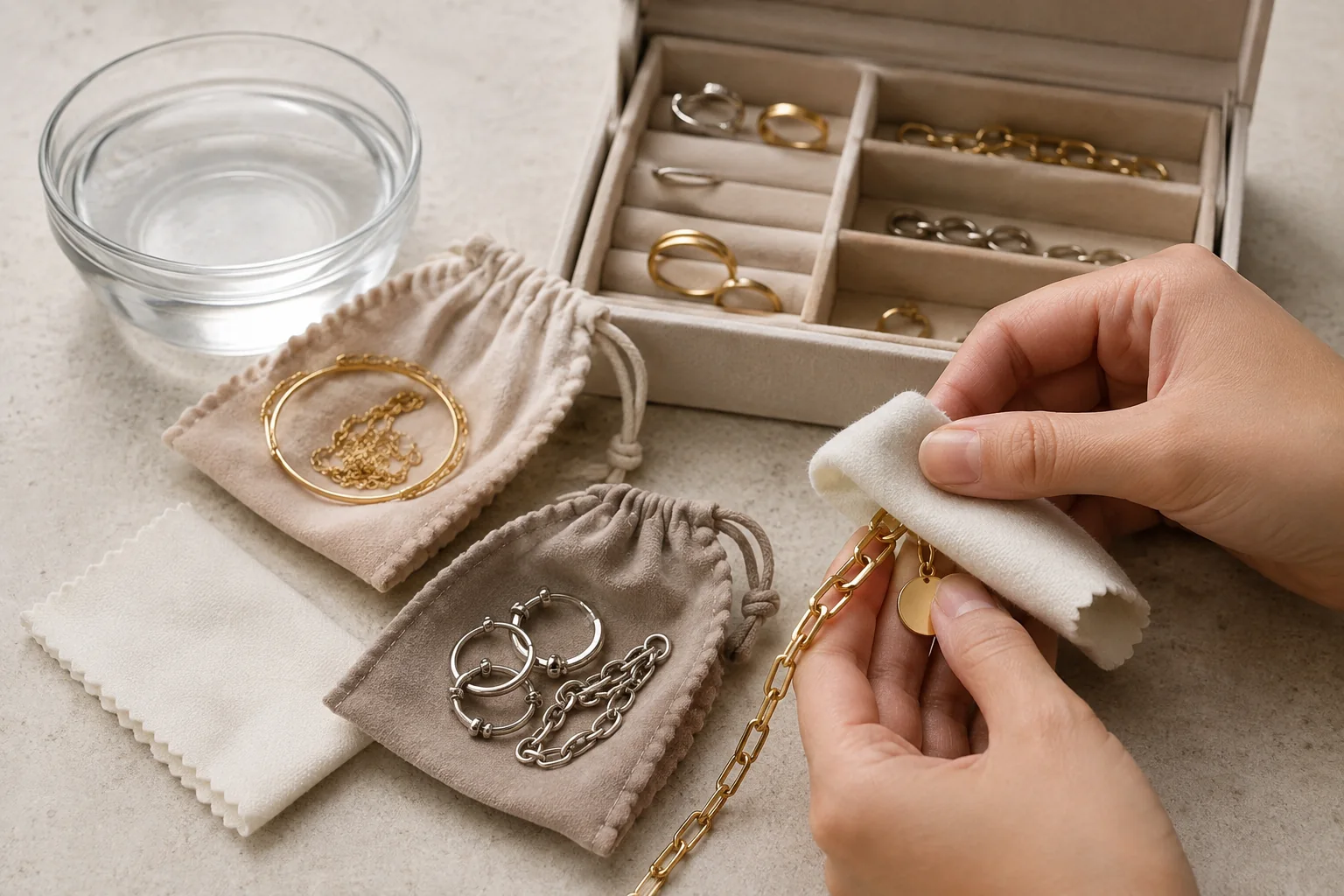
For a private-label jewelry brand, an after-sales policy is not only a customer-service page. It is a sourcing control. The policy affects material and finish selection, assembly choices, product care content, packaging, spare-component planning, retailer training, photo evidence, return handling, and the feedback sent back to the factory. A promise that is vague, broader than the product design supports, or inconsistent across a product page and a retailer pack can create avoidable friction for everyone in the chain.
This guide is a commercial planning framework, not legal advice. Consumer warranty, return, and advertising rules vary by selling market, sales channel, product, and actual policy wording. In the United States, the Federal Trade Commission’s Businessperson’s Guide to Federal Warranty Law explains that a business is not required to offer a written warranty, but written consumer-product warranties can bring legal requirements. Brands should obtain market-specific advice before publishing, labeling, or offering a consumer warranty.
OWGOW supports B2B jewelry projects from a 100-piece MOQ. Samples are typically planned in about three days after the approved design and materials are ready; standard bulk production is typically about 7–10 days after scope approval. Those sourcing facts are not a warranty promise. They are useful checkpoints for a brand to decide what evidence, quality controls, and remedy options can realistically be supported.
The six keyword themes this guide serves
This page addresses six related buyer questions:
- jewelry warranty policy
- private label jewelry warranty
- fashion jewelry warranty
- jewelry returns policy for retailers
- jewelry repair and replacement policy
- wholesale jewelry after-sales support
First decide what the policy is meant to solve
A policy can serve several different audiences: a consumer who needs care guidance, a retailer who needs a clear return route, a warehouse team sorting a claim, and a sourcing team that needs comparable defect evidence. Do not make one sentence carry all those jobs. Map the customer journey and set the boundary of each document.
For example, a retail-facing care card may explain how to clean and store an item. A retailer handbook may define the claim window, evidence needed, and order reference. An internal quality record may classify the actual issue against the approved sample. A supplier instruction may identify which components or finishes require special attention in factory testing. Each can be consistent without exposing an internal commercial agreement to the end customer.
| Policy component | Primary audience | Practical purpose |
|---|---|---|
| Consumer care and warranty terms | Consumer or gift recipient | Sets clear, readable expectations before and after purchase |
| Retailer claims process | Stockist, marketplace, distributor | Makes evidence, timeframes, contact path, and credit route predictable |
| Internal claim log | Brand and quality team | Finds recurring patterns by SKU, lot, finish, component, and market |
| Supplier feedback brief | Factory and project team | Converts reported issues into observable production checks |
Avoid promising outcomes that cannot be verified
“Lifetime quality,” “tarnish-proof,” “allergy-free,” or “unbreakable” can be much harder to support than a specific, carefully scoped statement. A fashion jewelry warranty should describe what it covers, the conditions, what evidence is needed, who provides the remedy, and what happens next. It should not use a broad claim to conceal an unknown finish, unreviewed material disclosure, or unclear customer-care expectation.
The right policy is not necessarily the longest or most generous-sounding one. It is the one that a brand can explain consistently, a retailer can administer, and a supplier can use as input for quality improvement. When the sales team cannot explain a term in plain language, the buyer should revise it before launch.
Build the product evidence before writing the terms
The clearest policy begins with a product record. For each SKU, keep the product name and reference, material and finish direction, component and closure information, dimensions, target product application, care instructions, approved visual reference, packaging format, market, batch or purchase-order reference, and relevant quality criteria. This is not a claim that every item will behave identically in every use case; it is the baseline needed to make a later issue review meaningful.
For plated or coated fashion jewelry, the buyer should distinguish visible production defects at handover from gradual change associated with use, care, environment, friction, cosmetics, storage, or contact with liquids. For clasps, posts, jump rings, stones, or adjustable parts, define the observable assembly or function point to check. A warranty can then state its scope more responsibly, and customer service can request relevant evidence without creating a burden that the customer cannot meet.
| Record | What to retain | Why it helps after sale |
|---|---|---|
| Golden sample | Dated approved physical reference and photographs | Gives a consistent visual and construction comparison point |
| Product specification | Dimensions, materials, finish direction, components, revision | Avoids judging a later claim against memory |
| Care content | Approved card, webpage, or pack insert | Keeps consumer guidance consistent with the product sold |
| Batch/PO trace | Commercial handover reference and delivery date | Lets the brand group reports without publishing sensitive data |
| Claim log | Issue type, evidence, decision, remedy, root-cause follow-up | Turns feedback into a pattern, not isolated anecdotes |
Keep customer care and product design connected
Care language should match the actual product and packaging. A delicate stone setting, a polished plated surface, or a long chain can need different handling information. If the product changes, the care card and policy should be checked alongside it. This is one place where customer requirements can reveal an unplanned constraint: a retailer may expect a gift-ready care card, an e-commerce seller may need a digital version, and a distributor may need a claim form that their team can use in a different language.
Use OWGOW’s [jewelry care instructions guide](../jewelry-care-instructions-for-private-label-brands/) and [findings and clasps specification guide](../jewelry-findings-and-clasps-specification-guide/) as supporting planning resources. They help a buyer turn general language into a product-specific brief before the item enters bulk production.
Define defects, wear, and claim evidence separately
Many after-sales disputes happen because “defect” has never been defined. A useful policy and internal process do not decide every individual case in advance; they distinguish categories that can be reviewed fairly. A visible plating inconsistency on an unused item, a closure that does not function on arrival, and a care-related surface change after extended use are different fact patterns. They should be reviewed with different evidence and without assuming the outcome.
| Review category | Evidence the brand can request | Internal next step |
|---|---|---|
| Arrival or fulfillment issue | Order reference, delivery date, product and pack photographs | Confirm SKU, count, packing, and handover condition |
| Visible finish or assembly concern | Clear photos/video, product reference, claim timing | Compare with approved sample and defined acceptance points |
| Functional component concern | Short function video, close photos, use context | Review clasp, link, backing, adjustment, or setting against specification |
| Wear or care question | Product age, care/storage context, images | Provide care support; assess whether further review is appropriate |
| Recurring retailer pattern | Claim count by SKU/lot/channel and evidence samples | Escalate to a controlled supplier-quality review |
This separation is useful for a jewelry repair and replacement policy because it helps a brand decide whether a replacement, repair option, credit, care explanation, or further evidence request is appropriate. The policy itself should not promise an outcome before the documented review occurs. In some programs, repair may be impractical because an exact component or finish is no longer available; in others, a controlled replacement may be more consistent. Decide the route at the collection-planning stage rather than improvising after a public complaint.
Mid-article CTA: align your product brief with the customer promise
Preparing a private-label jewelry collection? Send OWGOW your product references, intended market, care-content direction, and any retailer after-sales requirements. We can identify the specification and sample details needed for a more controlled production brief. [Send your requirements](../../index.html#contact) or email [info@owgow.com](mailto:info@owgow.com).
Give retailers a workable claim route
A jewelry returns policy for retailers should be short enough to use under time pressure. State the email or account route for a claim, which order or SKU reference is needed, which photographs or video help identify the issue, who makes the commercial decision, and how a resolution will be recorded. Do not build a process that assumes a store employee has access to supplier records. A structured email or simple account form can be enough when it routes the claim to the right owner.
For a wholesale jewelry after-sales support process, include the initial retailer delivery check in the operating instructions. That is the best moment to identify transit damage, wrong SKU, missing units, packaging mismatch, or a visible issue before the stock reaches a consumer. Retailers should retain the outer-carton and unit-pack photographs where relevant, but should not be asked to create excessive evidence for a straightforward packing issue.
Suggested retailer claim fields
- Retailer name, email, purchase order or invoice reference, and claim date.
- SKU, quantity affected, product/pack photos, and short factual description.
- Whether the item is unused, received damaged, sold and returned, or showing a functional concern.
- Delivery/arrival timing and any batch or carton reference available.
- Requested resolution category: information review, replacement consideration, credit consideration, or return instruction.
Use neutral labels. “Requested resolution” is more accurate than promising a replacement at form submission. It also gives the brand a clean claim log that can be compared across sales channels.
Feed verified claims back into quality control
After-sales data is only valuable if it reaches the product and quality team in a usable form. Group claims by actual pattern: finish issue, closure function, stone retention, component alignment, pack-out, wrong SKU, transit condition, or care question. Keep the original evidence and the conclusion separate. A customer’s report is important evidence, but it is not automatically a root-cause finding.
When a pattern is verified, update the production brief with an observable control point. For example, a repeat clasp concern may lead to a specified function check; a finish concern may lead to a clearer sample comparison; a packaging issue may lead to a revised protective component or pack-out instruction. Factory testing should be defined as a documented check of the agreed condition, not a marketing label. The buyer can ask that the relevant points be checked against the approved reference during production and noted in the handover record.
Shipment inspection is the final opportunity to compare selected finished units with the approved specification, packaging, care materials, and visible quality criteria before dispatch. It cannot predict every real-world use condition, but it can prevent a known production or pack-out deviation from reaching the customer. Keep the inspection scope proportionate and specific: correct SKU, visible finish, closure action, component attachment, approved packaging, correct care insert, quantity, and carton allocation.
Plan the remedy route before launch
The commercial remedy should match the problem and channel. A brand may choose different routes for a missing care card, a damaged unit received by a retailer, an issue reported after consumer use, or a potential systemic quality problem. The choice should be documented internally, reviewed with legal and commercial advisers where needed, and communicated in accurate customer-facing language.
| Situation | Controlled decision question | Record to keep |
|---|---|---|
| Isolated packing mismatch | Can the retailer remedy this with a replacement pack or credit process? | SKU, PO, photographs, resolution |
| Unused product issue on arrival | Does evidence match a defined production or handling issue? | Sample comparison and relevant delivery record |
| Used-item concern | What does the evidence show about product, care context, and terms? | Customer communication and review outcome |
| Repeat issue in one SKU | Is there a pattern requiring a hold, retest, or corrective action? | Claim trend, affected scope, owner, corrective action |
Avoid telling a customer that a policy “does not apply” without documenting why. A consistent, courteous response with the actual product information protects trust better than a generic rejection. At the same time, avoid an unqualified promise that sets an expectation a brand cannot maintain across markets or product revisions.
Make public wording clear and market-reviewed
A consumer-facing written warranty or guarantee needs professional review for its selling market. The FTC guide notes that U.S. written consumer-product warranties can carry disclosure and availability requirements; the Act’s application and the appropriate language depend on the facts. That is why a B2B manufacturer should not invent a legal warranty for a brand. The brand, importer, retailer, and qualified advisers should own the final policy wording and rollout.
The production team can support the process by maintaining accurate product facts, approved samples, finish and component direction, care-content references, packaging materials, and shipment records. OWGOW can support documentation discussions relating to BSCI, ISO, SGS, REACH, and RoHS where applicable, but such documents do not replace a market-specific warranty or consumer-law analysis.
Before posting a policy, confirm that the product page, retailer materials, warranty page, care card, package, paid advertising, and customer-service template do not contradict one another. Where the policy is available online, test the page on mobile and make its revision/date visible. Where a retailer is involved, provide a controlled copy and record the revision supplied.

FAQ
Should every private-label jewelry brand offer a written warranty?
Not necessarily. A written warranty is a commercial and legal decision, not an automatic sourcing requirement. Evaluate the product category, market, sales channel, brand capability, and legal requirements with qualified advisers before publishing terms.
What should a fashion jewelry warranty cover?
The answer should be specific to the product and market. A practical framework identifies the covered product, coverage conditions, evidence process, exclusions or care context where legally appropriate, remedy route, and contact method. Do not use broad quality claims that cannot be supported.
How can a retailer report a jewelry return efficiently?
Provide a clear email or account route requesting retailer name, email, order reference, SKU, quantity, images/video where useful, factual issue description, and the requested review type. Record the response and the final decision against the same reference.
Can a factory decide consumer warranty claims?
The factory can provide factual production and quality information, but the brand and relevant commercial or legal owners should govern consumer-facing policy and final claim decisions. Escalate recurring evidence through a documented quality process.
Conclusion
An effective jewelry warranty policy is a bridge between the promise a brand makes and the controls behind it. Define the product record, distinguish defects from wear and care questions, make retailer claims easy to route, and convert verified patterns into specific production controls. When the terms, care content, packaging, inspection record, and customer-service process use the same approved facts, after-sales support becomes clearer for buyers and more useful for future production.
CTA: plan your after-sales-ready jewelry brief
Share your collection references, target markets, product care direction, and retailer support requirements. OWGOW can help organize the technical product and sample details for a practical private-label sourcing brief. [Get a quote](../../index.html#contact) or email [info@owgow.com](mailto:info@owgow.com).
ARTICLE TAGS
RELATED RESOURCES
Keep building the brief
Use these buyer resources to connect this decision with the next specification, approval, or sourcing step.
- Craftsmanship hub →
- Jewelry Sample Approval and Pre-Shipment Inspection →
- Jewelry Defect Classification: A Practical QC Guide for Buyers →
External buyer reference: FTC Jewelry Guides