Introduction
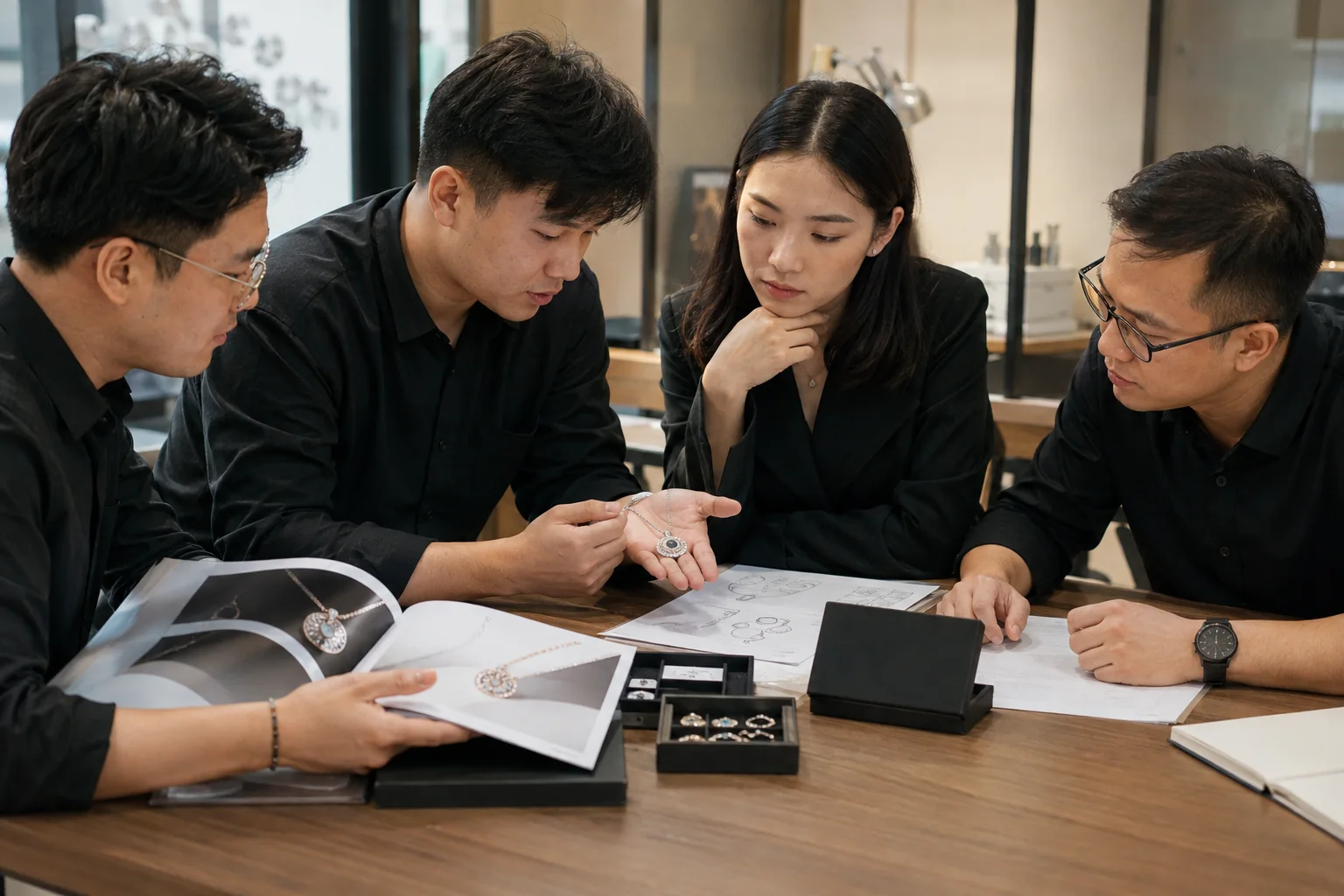
Private label, OEM, and ODM are often used as if they mean the same thing. They do not describe exactly the same buyer-factory relationship. For jewelry brands, the practical difference is who defines the product, what development work is required, how branding is applied, and what must be approved before a production order can start.
The right model is the one that matches your launch speed, product differentiation, budget, and ability to manage specifications. It is not automatically the most custom option. This guide gives B2B buyers a clear way to decide before requesting samples.
The short answer: how are the models different?
Private label adapts a defined product program to your brand; OEM follows your approved product specification; ODM starts from a manufacturer-developed design that you select or adapt. Actual scopes vary by contract, so a buyer should describe the deliverable rather than rely on the label alone.
Private label: a branded, controlled product route
Private label usually works well when a buyer wants to bring a collection to market without developing every construction from zero. The buyer selects an existing or agreed product configuration and adds brand-facing elements such as a logo tag, card, pouch, box, or label. The factory and buyer still need to confirm materials, finish, components, product application, packaging, quantity, and acceptance criteria.
Private label can reduce development time, but it is not “no specification.” A catalog image does not confirm chain length, exact base metal, plating system, stone grade, logo placement, or packaging fit. The sample should show the final selling configuration.
OEM: manufacturing to the buyer’s product specification
OEM is appropriate when the buyer has a design, drawing, CAD file, tech pack, or detailed product brief and wants the manufacturer to produce it. The buyer’s role is stronger: they need to identify the required material, dimensions, surface finish, components, branding, packaging, and acceptable variations. The factory’s role is to assess manufacturability, prototype the item, identify process risks, and produce to the approved reference.
An OEM route often needs more sampling discipline. New tooling, delicate stone settings, unusual silhouettes, or bespoke components can make the route longer than a private-label launch. That is not a problem when differentiation is worth the development effort; it simply needs to be planned.
ODM: starting from manufacturer-led design capability
ODM usually means the manufacturer provides a design base, which the buyer can select or adapt. It can be helpful when a buyer needs curated direction, existing construction knowledge, or a faster route into a category. Before moving ahead, define what can be changed, whether a design is exclusive, what branding options exist, and how the product will be distinguished in your market.
Do not assume that ODM includes ownership or exclusivity. Those questions depend on the agreement, the source of the design, any tooling, and applicable law. Record the commercial understanding in writing before development begins.
A decision table for B2B buyers
| Question | Private label | OEM | ODM |
|---|---|---|---|
| Who defines core product? | buyer selects agreed configuration | buyer provides specification | manufacturer supplies design base |
| Development effort | usually lower | often higher | moderate and design-led |
| Branding work | central | central | central |
| Sample focus | final configuration and presentation | technical feasibility and repeatability | design adaptation and branding |
| Key risk | assuming a catalog image is a specification | incomplete brief or uncontrolled revisions | unclear rights or exclusivity |
What to lock before sampling
Regardless of model, create one current product record. It should include the product code, revision, image or drawing, dimensions, base material, finish, stone or pearl information, functional components, branding, packaging, target market, estimated quantity, and compliance questions. This is the buyer’s best defense against quote confusion.
Customer requirements should also describe what must not change without re-approval. For example: chain length, logo orientation, stone color range, post material, coating color, or box artwork. The factory can then identify changes before material commitment.
Quality and delivery controls belong in all three routes
Private label does not remove the need for factory testing, sample approval, or shipment inspection. OEM does not mean the buyer must solve every process detail alone. ODM does not make a product automatically suitable for every market. In every case, the parties should agree the approved sample, inspection points, documents to review, packaging standard, and handover timing.
For initial projects, sample planning at OWGOW is generally around three days after the design direction and materials are confirmed; standard bulk production is generally planned for 7–10 days after applicable approvals. These are planning ranges, not substitutes for a confirmed order schedule. New molds, special materials, testing, revisions, or custom packaging may change the route.
FAQ
Which model is fastest for a new brand?
An agreed private-label or ODM configuration can be faster because it usually requires less new development. The final timing still depends on the exact material, branding, packaging, quantity, and approvals.
Does OEM mean I own the design?
Not automatically. Design ownership, files, tooling, confidentiality, and exclusivity should be addressed in the written commercial agreement. Seek appropriate professional advice for your situation.
Can a product move from ODM to OEM later?
It may be possible to develop a more bespoke specification after an initial launch, but it should be treated as a new controlled development with a revised brief and sample.
Conclusion
Choose private label when brand-ready speed is the priority, OEM when you have a controlled product specification worth producing, and ODM when manufacturer design capability can accelerate your assortment. In all cases, document the real product and approval path rather than relying on an acronym.
CTA
[Contact OWGOW](mailto:info@owgow.com) to discuss a private-label, OEM, or ODM jewelry brief. For the next practical step, read our guide to creating a jewelry tech pack.
ARTICLE TAGS
RELATED RESOURCES
Keep building the brief
Use these buyer resources to connect this decision with the next specification, approval, or sourcing step.
- Private-label hub →
- How to Choose a Private Label Jewelry Manufacturer →
- Gold Vermeil vs. Gold-Plated vs. PVD Stainless Steel →
External buyer reference: FTC Jewelry Guides